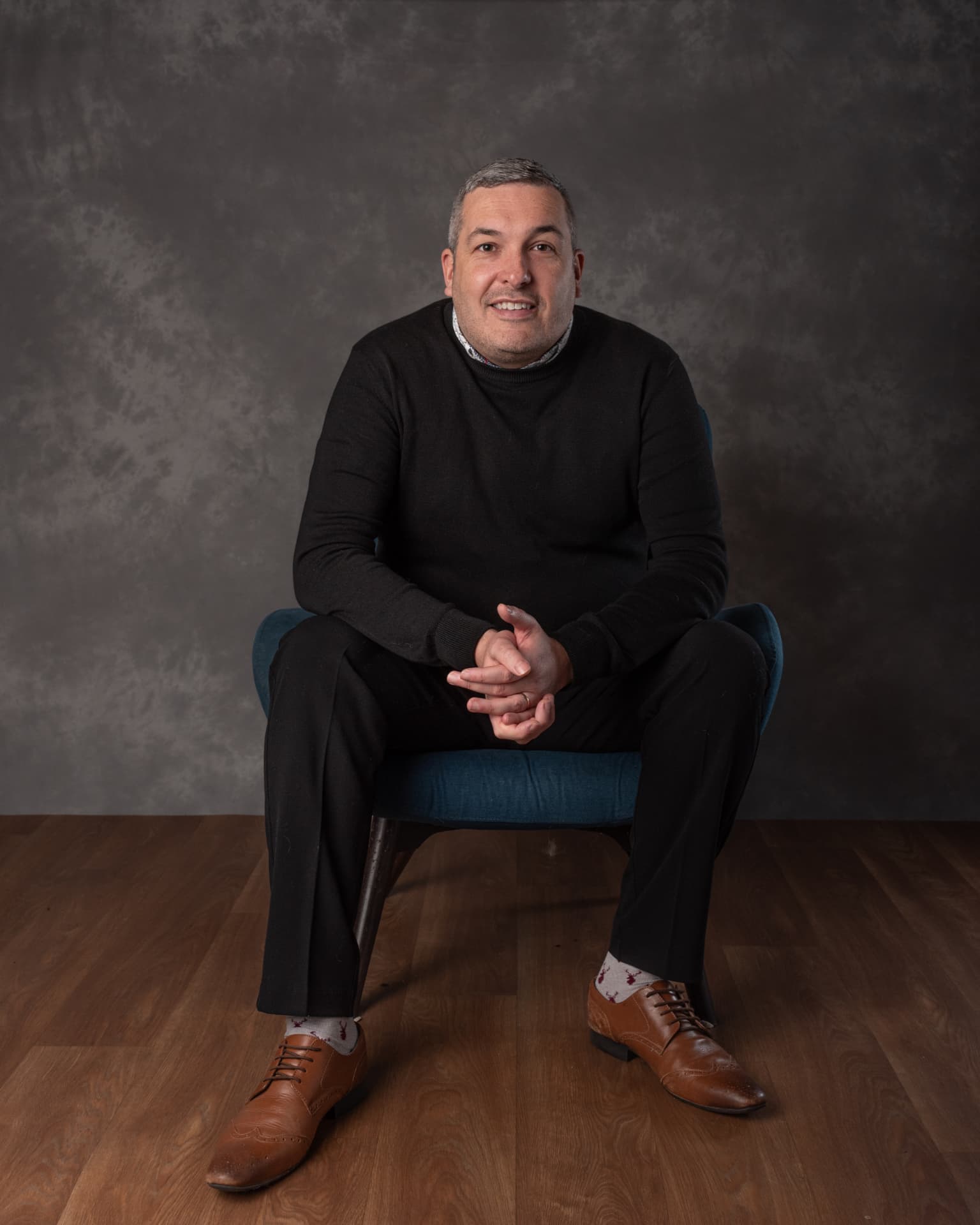
About Chris
I run businesses. I am not a consultant.
I help owner-led businesses become less dependent on the owner, because I have had to do it in my own.
What I am doing now
I have built a business, sold it, and bought it back. I have grown a team, made payroll in hard months and been the person everything came back to. That is the part most owners recognise.
I build and run businesses around problems owners put up with for too long. A tax relief nobody looks into. An enquiry that arrives while someone is on site and gets forgotten. Job details spread across WhatsApp, camera rolls and memory. A good conversation with no clear next step.
I am not interested in adding software for the sake of it. I want to know which part of the job is slow, unreliable or still stuck with one person, then decide what to change. Sometimes that is a tool. More often it is clearer ownership, a better hand-off or a conversation nobody wants to have.
“The question I come back to is simple: if this went wrong tomorrow, who would be expected to sort it out?”
What I want the work to make possible
I take my children to school and usually collect them too. That is not something I leave to chance around the edges of a busy week. It is one of the reasons I care about how businesses are organised. Good work should not require everybody to be on call all the time or one person to rescue every loose end.
The businesses I am building now give me the chance to keep responsibility and control close together. That matters when you have made commitments to customers, employed people or asked someone to trust you with an important decision.
I received the Professional Services MD of the Year award at the SME Business Awards. I value it because it came from work that had to stand up commercially, not from a personal brand exercise.
The route here
The moments that changed how I look at work.
This is not a CV. It is the short version of the experiences I still draw on when I am deciding whether a business, deal or piece of software is worth pursuing.
01
Commercial discipline and early initiative
I had a paper round at thirteen and quickly learned to organise the route and the money, not just make my own deliveries. Later, when advertised motor-trade roles demanded experience I did not have, I approached dealerships directly. By 21, I had become the youngest Business Manager in a national dealer network. It taught me to ask directly, prepare properly and understand the commercial consequence of a decision.
02
Becoming a father changed my definition of success
The motor industry brought long days and six-day weeks. Becoming a father made me decide that being present at home was not something to leave around the edges of work. I moved into a role at Shropshire Chamber of Commerce because I wanted a different shape to my week and a wider view of business.
03
Learning how businesses really operate
At Shropshire Chamber of Commerce, I worked with hundreds of businesses and saw how relationships, decisions and unclear ownership shape results. I developed People Portal, an early video-CV employment proposition, and later ran a well-established supplier of OEM fastening systems, growing revenue from around £800,000 to £1.1 million while expanding the team and strengthening international customer and supplier relationships.
04
Building, selling and buying back a business
We built Reclaim Tax UK around tax opportunities that businesses were overlooking. After the acquisition, the new owners changed strategic direction. Protecting clients and team members made the gap between responsibility and control impossible to ignore. We jointly bought Reclaim Tax UK back. The experience sharpened how I think about contracts, governance and keeping enough control to honour a commitment. Today I am a partner in Reclaim Tax UK and am building Keystone AI, Keystone Site and Gain Momentum.
The work now
The businesses come from different observations.
I am involved in each of these companies. The common thread is not a slogan. It is the kind of problem each one was created to take seriously.
Tax relief and incentives
Reclaim Tax UK
Partner
We built Reclaim Tax UK after seeing how often legitimate tax reliefs were left unexplored simply because nobody had the time or specialist knowledge to investigate them.
Read why I built it
AI and customer response
Keystone AI
Founder
Keystone AI came from a problem I kept seeing in trade businesses: a good enquiry arrives while somebody is on site, then the response depends on memory and spare time.
Read why I built it
Site-to-office operations
Keystone Site
Founder
Keystone Site started with a familiar construction problem: important job information disappears into WhatsApp messages, camera rolls and conversations that never reach the office.
Read why I built it
Relationship-led outreach
Gain Momentum
Founder
Gain Momentum is built around a simple observation: worthwhile conversations are easy to start and surprisingly easy to lose when follow-up lives across personal inboxes and memory.
Read why I built it
Life organisation and planning
LifeVault UK
Founder
LifeVault UK was built around a practical question: if something happened tomorrow, would the people you trust know where to find the information they need?
Read why I built it
Branded workwear and merchandise
Good Kit Co
Founder
Good Kit Co came from how awkward branded kit usually is to order: high minimums, unclear artwork approval and no straight answer on what will actually turn up.
Read why I built it
What happens next
See the decisions and observations behind my approach.
I have written down the working rules that matter to me, and the experience behind each one.